Medical Laboratory PUF Panel Clean Room
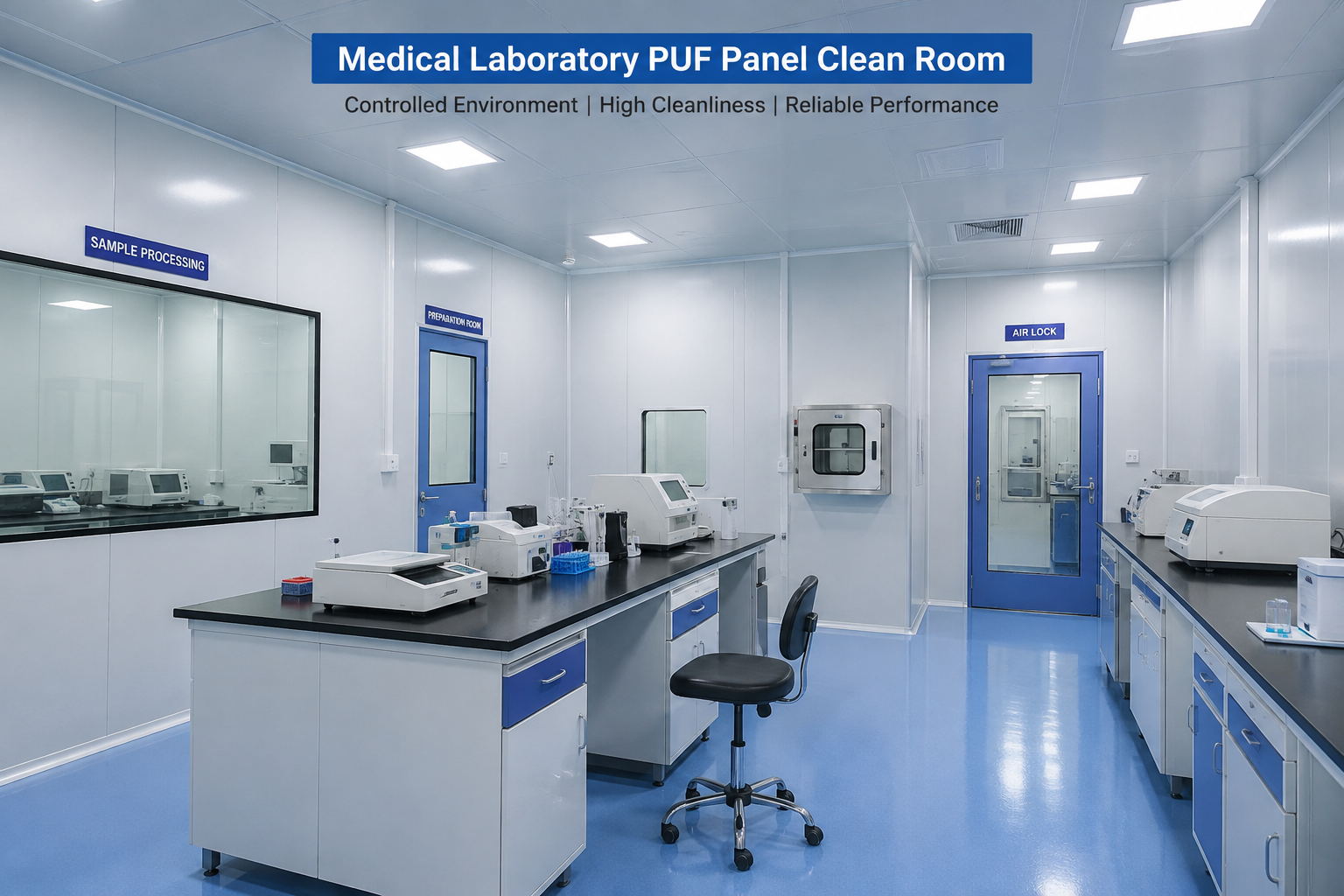
Cleanroom PUF Panel Installation: A CompleteGuide
Introduction
PUF (Polyurethane Foam) panels are one of the most widely used construction materials for buildingcleanroom walls, ceilings, and partitions. Known for their excellent thermal insulation, lightweightstructure, fire resistance, and ability to create smooth, seamless, non-particle-generating surfaces, PUFpanels have become the industry standard for cleanroom construction across pharmaceuticals,biotechnology, electronics, hospitals, and food processing facilities.
Proper installation of PUF panels is critical — not just for structural stability, but for achieving andmaintaining the airtight, contamination-free environment that a cleanroom demands. This page walksthrough what PUF panels are, why they're used in cleanrooms, and the step-by-step process of installingthem correctly.
Cleanroom PUF Panel Installation: A CompleteGuide
Introduction
PUF (Polyurethane Foam) panels are one of the most widely used construction materials for buildingcleanroom walls, ceilings, and partitions. Known for their excellent thermal insulation, lightweightstructure, fire resistance, and ability to create smooth, seamless, non-particle-generating surfaces, PUFpanels have become the industry standard for cleanroom construction across pharmaceuticals,biotechnology, electronics, hospitals, and food processing facilities.
Proper installation of PUF panels is critical — not just for structural stability, but for achieving andmaintaining the airtight, contamination-free environment that a cleanroom demands. This page walksthrough what PUF panels are, why they're used in cleanrooms, and the step-by-step process of installingthem correctly.
Why PUF Panels Are Ideal for Cleanrooms
Cleanroom construction demands materials that support strict contamination control while alsomaintaining structural and environmental performance. PUF panels meet these needs in several ways:
Airtight Sealing
– Interlocking joints minimize air leakage, helping maintain positive/negative pressuredifferentials between rooms.
Easy to Clean
– The smooth, non-porous metal surface can be wiped down and disinfected withoutharboring bacteria or particles in cracks or crevices.
Rapid Installation
– Prefabricated panels can be installed significantly faster than traditional drywall ormasonry construction, reducing project downtime.
Design Flexibility
– Panels can be cut and configured to accommodate viewing windows, pass-throughboxes, doors, and utility penetrations.
Consistent Climate Control
– Superior insulation properties reduce the load on HVAC systems, helpingmaintain tight temperature and humidity tolerances.
Pre-Installation Planning
Before installation begins, several preparatory steps ensure the process goes smoothly and meetscleanroom specifications:
1. Site Assessment and Layout Finalization
Engineers review architectural drawings to finalize room dimensions, panel layout, door and windowplacements, and utility routing (electrical conduits, HVAC ducting, piping) before any panels arrive on site.
2. Panel Specification Selection
Based on the required ISO cleanroom classification, thermal requirements, and fire safety codes, theappropriate panel thickness (commonly 50mm, 75mm, or 100mm) and density of foam core are selected.
3. Site Preparation
The installation area is cleared, leveled, and cleaned. Flooring must be finished or at a stage ready toreceive wall tracks, and structural ceiling supports must be confirmed to bear the load of ceiling panelsand any suspended equipment.
4. Material Inspection
Upon delivery, panels are inspected for any damage, warping, or defects in the foam core or metal skinbefore installation begins.
Maintenance Considerations After Installation
Once installed, PUF panel cleanroom walls and ceilings require ongoing care to preserve theirperformance:
Regular Cleaning
– Use non-abrasive, cleanroom-approved disinfectants to avoid damaging the panel'sprotective coating.
Periodic Joint Inspection
– Sealant can degrade over time; joints should be inspected and resealed aspart of routine maintenance.
Avoiding Sharp Impacts
– While durable, panels can dent or puncture under heavy impact, which cancompromise the airtight seal.
Monitoring for Moisture Ingress
– Any signs of moisture at seams should be addressed promptly toprevent foam core degradation or mold growth.